
The stand by China spelt out by its foreign ministry insisting that it takes the 1959 line on perception of the LAC amid a nearly five-month-long border standoff in eastern Ladakh triggered a strong reaction from India.

'I want to assure this House that in these talks we have not conceded anything.' Full text of what Defence Minister Rajnath Singh told Parliament on the Chinese pullback in eastern Ladakh.

The talks took place over video call on Sunday. According to sources, talks were held for over two hours in a cordial and forward-looking manner.

The Border Defence Cooperation Agreement inked between India and China on Wednesday facilitates establishment of a hotline between the military headquarters of the two countries, besides border personnel meeting sites in all sectors receiving broad directive not to tail each others' patrols along the disputed borders.
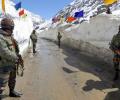
The clear assertion by New Delhi came ahead of a fresh round of Lt General-level talks between the Indian army and the Chinese PLA which government sources said is set to take place within the next two days.

The Chinese military has already completed moving back its troops from the face-off sites in Galwan Valley, Gogra and Hot Springs in line with the first phase of the disengagement process from the friction points on the LAC in eastern Ladakh, sources said. The main focus now shifts to Pangong Tso. India has been insisting that China must withdraw its forces from areas between Finger Four and Eight.
The only way to resolve the current military standoff along the Line of Actual Control in eastern Ladakh was for Beijing to realise that trying to 'change the status quo by resorting to force or coercion, is not the right way forward', India's ambassador to China Vikram Misri said in a hard-hitting interview to PTI.
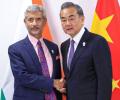
The joint statement said Jaishankar and Wang agreed that both sides should take guidance from the series of consensus reached between leaders of the two countries on developing India-China relations, including not allowing differences to become disputes.

Raking up the border issue, Congress leader Rahul Gandhi on Friday said every individual in Ladakh knows that China has "taken away our land" and claimed that Prime Minister Narendra Modi's assertion that not an inch of land was taken away was "absolutely false".

India and China decided to seek a fair and rational solution to their border dispute on Saturday as they focused on the proposed border defence cooperation agreement to avert incursions like the one witnessed in Leh region last month.

A simultaneous announcement about the meeting was made from New Delhi and Islamabad on Wednesday after Foreign Secretary Sujatha Singh and her Pakistani counterpart Aizaz Ahmad Chaudhry had a telephonic conversation.

Prime Minister Narendra Modi's visit to Arunachal Pradesh on Friday, February 20, irritated the Chinese government so much that it summoned the Indian ambassador to register its protest against Modi visiting a territory China claims as Southern Tibet.

The Border Defence Cooperation Agreement with China needs closer scrutiny, says Rup Narayan Das.
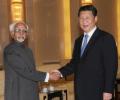
Vice President Hamid Ansari on Monday held talks with Chinese President Xi Jinping and conveyed the new Indian government's interest in furthering bilateral ties, even as he flagged off India's concerns over border related issues during his parleys with the top leadership in Beijing.
 © 2026 Rediff.com - Advertise with us - Disclaimer - Privacy Policy - Sitemap - Feedback - About us - Terms of use - Grievances